Welcome to our Engineered Wood Flooring Guide
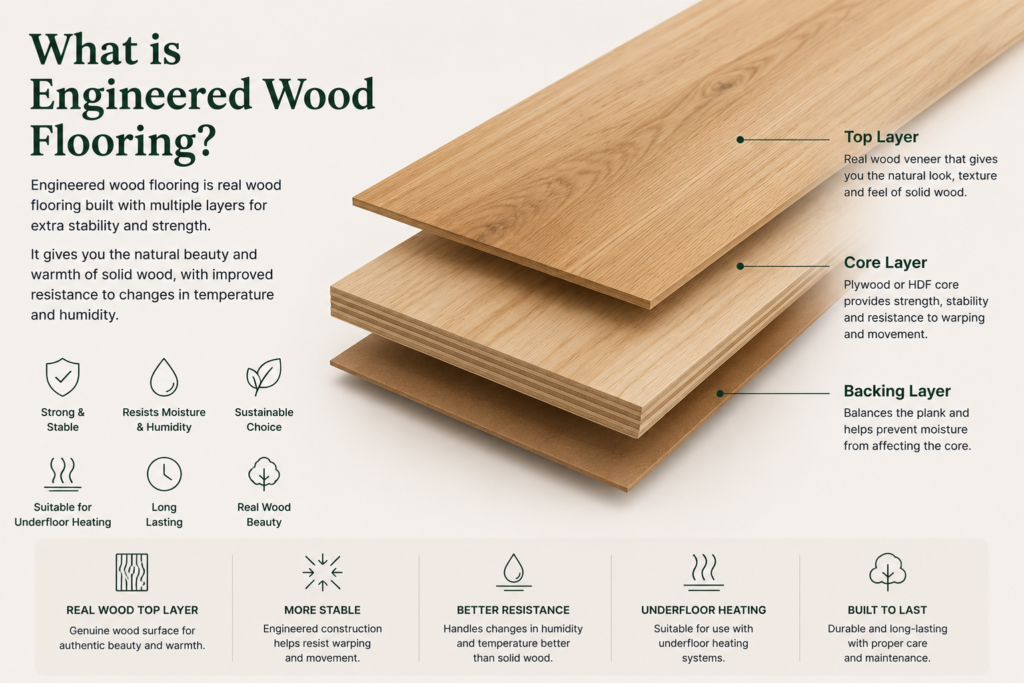
Engineered wood flooring is the option for people who want the real thing — actual wood underfoot — without the price tag or the fussiness of solid hardwood. It’s real timber on top, bonded to a more stable core underneath, which means less warping, more compatibility with underfloor heating, and a finish you can still sand and refinish down the line. This guide covers everything you need before you buy, install, or live with engineered wood flooring — costs, pros and cons, where it works best, and the mistakes that trip up almost every first-timer.
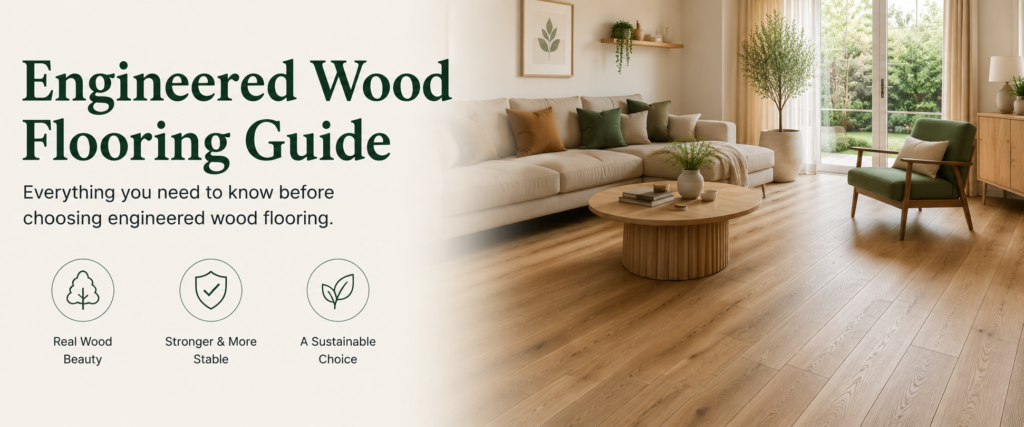
Whether you’re doing a living room, dining room, hallway, or a room with underfloor heating that’s ruled out solid wood, this guide will help you understand how engineered wood actually works, where it performs best, and whether it’s the right step up from laminate or LVT for your space.
How Much Does Engineered Wood Flooring Cost?
Prices vary mainly by the thickness of the real wood veneer on top (the part that determines how many times it can be sanded and refinished), but here’s a realistic UK range:
- Budget engineered wood: £25–£35 per m² — thin veneer (around 2–3mm), can typically only be sanded once, if at all
- Mid-range engineered wood: £35–£55 per m² — the sweet spot for most homes; 3–4mm veneer, can usually be sanded and refinished 1–2 times
- Premium engineered wood: £55–£90+ per m² — thick veneer (4mm+), multiple species and finish options, can often be sanded and refinished 3+ times over its life
On top of the flooring itself, budget for:
- Underlay: £3–£8 per m², especially important if you’re not glueing directly to the subfloor
- Installation kit (if you don’t already own one): £15–£30, one-off cost
- Skirting/beading and threshold strips: £20–£60 depending on room size
For a typical 4m × 4m room (16 m²), you’re looking at roughly £500–£950 all in for a DIY install using mid-range engineered wood — versus £1,000–£1,600+ if you pay someone to fit it for you. Use our Flooring Calculator to get an exact figure for your room, including underlay.
Veneer Thickness Explained
Unlike laminate’s AC rating or LVT’s wear layer, engineered wood is judged mainly by its top veneer thickness — the layer of real, solid wood sitting on top of the stable core:
- 1mm–2mm – Budget-friendly, but little to no room for future sanding — treat it as a one-time finish
- 3mm–4mm – The sweet spot for most homes; enough real wood on top to sand and refinish once or twice over the years
- 4mm+ – Premium territory. Behaves almost like solid hardwood in terms of longevity and refinishing potential, while keeping the stability benefits underneath
The thicker the veneer, the closer engineered wood gets to solid hardwood in both looks and lifespan — which is also why it costs more.
How Long Does Engineered Wood Flooring Last?
Good quality engineered wood typically lasts 20 to 30 years, and sometimes longer with a thick veneer and proper care — this is the one flooring type in this guide series that can genuinely be restored rather than just replaced. A few habits help it go the distance:
- Keep humidity reasonably stable in the room — engineered wood handles fluctuation far better than solid wood, but it’s not immune
- Use furniture pads and avoid dragging heavy items across the surface
- Reseal or refinish before the veneer wears through completely, not after — once you’re through the top layer, sanding won’t fix it
Pros and Cons of Engineered Wood Flooring
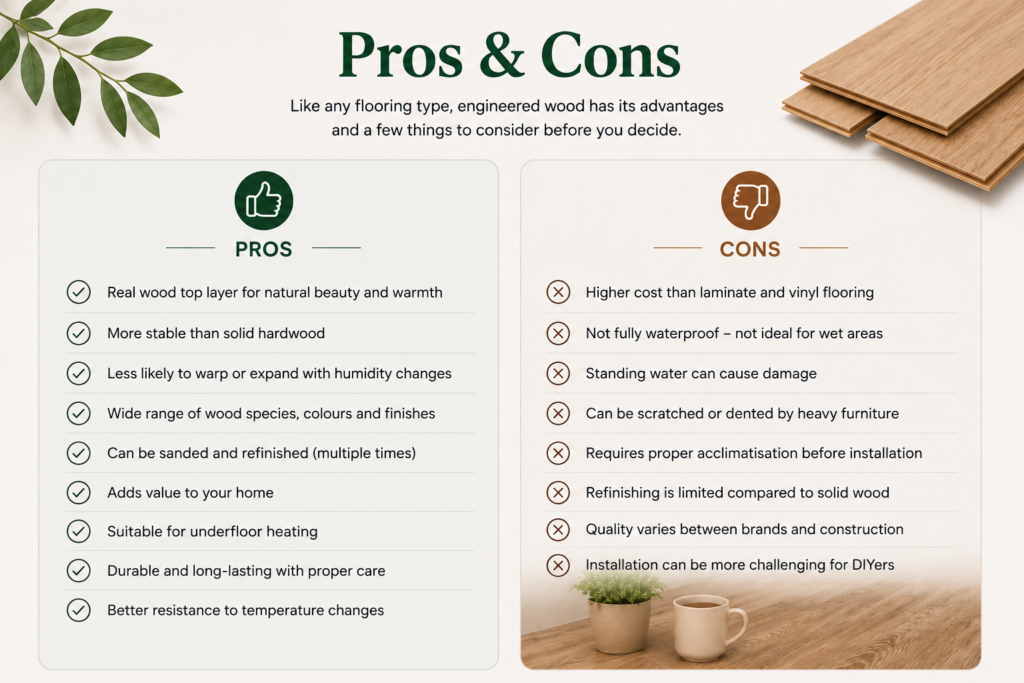
Pros:
- Real wood surface — genuine timber grain and feel, not a printed image
- More stable than solid hardwood — the layered core resists warping and gapping with temperature and humidity changes far better than solid wood
- Compatible with underfloor heating — something solid hardwood generally can’t handle
- Can be sanded and refinished — a genuine long-term investment, unlike laminate or standard LVT
- Adds real value to a home, similarly to solid hardwood, at a lower cost
Cons:
- More expensive than laminate or LVT for a comparable quality tier
- Not waterproof — better than solid wood in damp conditions, but still not suitable for bathrooms or anywhere with standing water risk
- Limited refinishing compared to solid hardwood — you get a few sandings, not dozens, depending on veneer thickness
- Installation can be trickier — some engineered wood is glued rather than click-lock, which is a bigger job for a first-timer
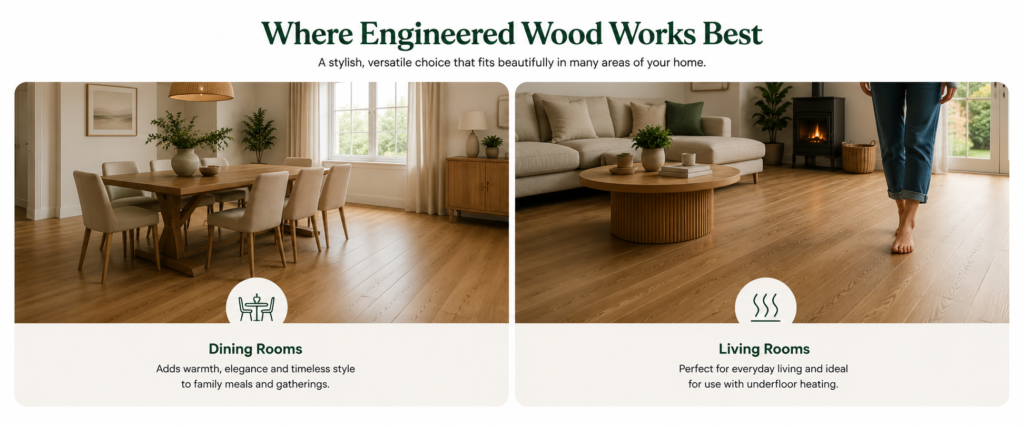
Engineered wood is at its best in living rooms, dining rooms, bedrooms, and hallways — anywhere you want the genuine look and feel of real wood, especially in homes with underfloor heating where solid hardwood isn’t an option. It’s also a strong choice if you’re planning to stay in the home long-term and want a floor that can be refreshed rather than replaced.
Where it’s not the right call: bathrooms, and anywhere with a real risk of standing water or high humidity — for those spaces, LVT is the better-suited choice from this guide series.
Common Mistakes
- Choosing too thin a veneer for a busy household. A 1–2mm veneer in a high-traffic living room will show wear faster and can’t be sanded back — match the veneer thickness to how hard the room actually gets used.
- Skipping the acclimatisation period. Like laminate, engineered wood needs time in the room it’s being fitted in — typically 48–72 hours — to adjust to humidity and temperature before installation.
- Getting the installation method wrong for the product. Some engineered wood is glue-down, some is click-lock, some is nail-down — always check which one you’ve bought before you start, rather than assuming.
- Not checking underfloor heating compatibility. Not every engineered wood product is rated for it — confirm before you install if that’s part of your setup.
- Buying too little flooring. Cuts, mistakes, and future repairs all eat into your total. Always add a waste allowance — our Flooring Calculator works this out automatically based on your flooring type.
Before You Buy Checklist
- Measure every room carefully — twice, ideally
- Use the Flooring Calculator to work out exact quantities, waste and cost, underlay included
- Check the veneer thickness matches how the room will actually be used
- Confirm the installation method (click-lock, glue-down, or nail-down) before you buy tools or adhesive
- Check underfloor heating compatibility if relevant
- Make sure the subfloor is level before you start
- Allow the flooring to acclimatise in the room for 48–72 hours before installing
Recommended Products
Everything you’ll need to install, protect and maintain your new engineered wood flooring — products commonly used by DIYers and professional installers alike.
Essential Installation
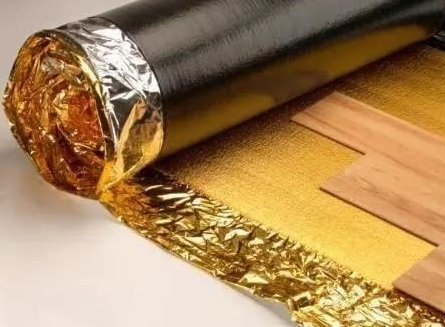
1. Engineered Wood Underlay
Adds comfort, sound reduction, and a small moisture barrier under click-fit or floating engineered wood installs.

2. Flooring Installation Kit
Includes a tapping block, pull bar, rubber mallet and spacers — essential for click-lock engineered wood installation.
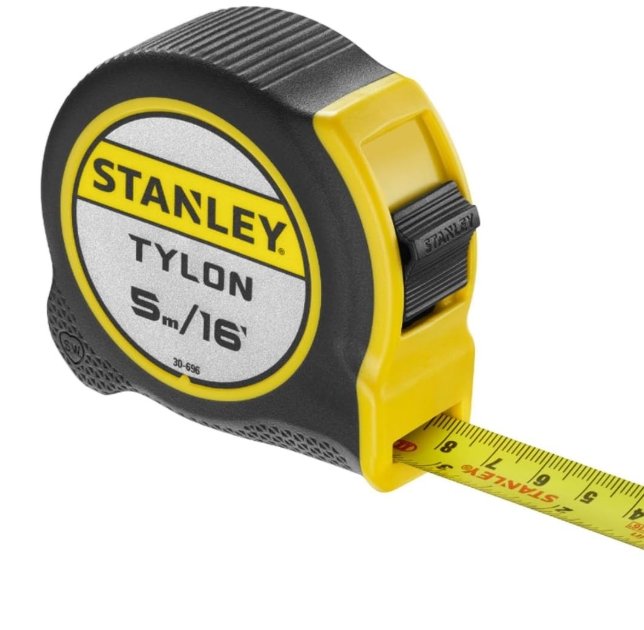
3. Tape Measure
Accurate measurements are essential before ordering flooring and planning cuts.
Finishing the Job
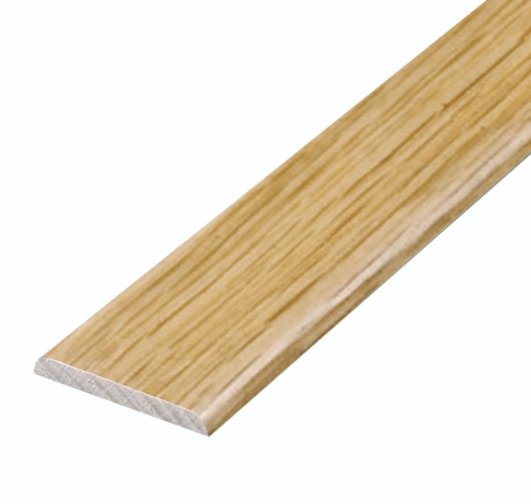
4. Door Threshold Strip
Creates a clean, safe transition between engineered wood and adjoining flooring.

5. Engineered Wood Floor Cleaner
A pH-neutral cleaner formulated for real wood surfaces — avoids dulling or damaging the finish.
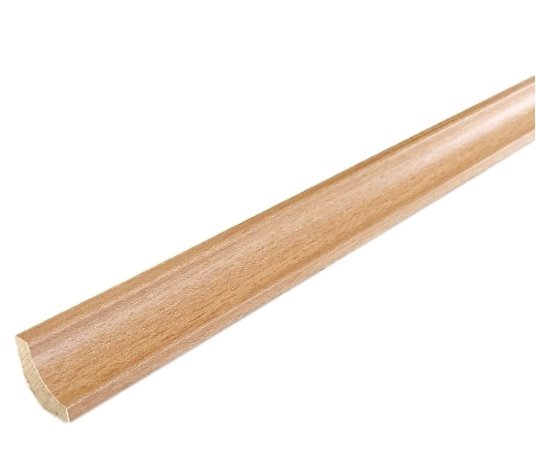
6. Beading
Covers the expansion gap neatly, adding a finished look to the edge of your flooring.
An Engineered Wood Floor Worth Looking At
If you want the real wood look and feel without going all the way to traditional solid wood flooring, engineered wood is a beautiful option.
⭐ Our Pick: GoodHome Visby Modern Blond Oak
This is one I’d put on your shortlist if you’re after a light, modern oak floor that works beautifully with neutral and Scandinavian-style interiors.
Why it’s worth a look:
- 🌳 Real wood top layer
- 🪵 Natural oak appearance
- 🏡 Modern blond-oak finish
- ⭐ Around 4.5/5 from 15 reviews
- 📦 1.35m² per pack
- 💷 Around £39 per m² when checked
- 🔥 Engineered wood can be suitable for underfloor heating when the specific product and installation requirements allow it
The big selling point here is that you’re getting real wood on the surface. Every plank has its own grain and character, so it doesn’t have that perfectly repetitive look you can sometimes get with wood-effect flooring.
💡 Before you buy
Engineered wood is an investment, so don’t just compare the price per box.
Check the overall board thickness, real-wood wear layer, installation method, finish and underfloor-heating compatibility before ordering.
And order a sample first if possible. Wood can look completely different in your home depending on your lighting and wall colours.
👉 Check the current price at B&Q
Prices, availability and reviews can change, so check B&Q’s current listing before buying.