Welcome to our New & Free Carpet Flooring Guide
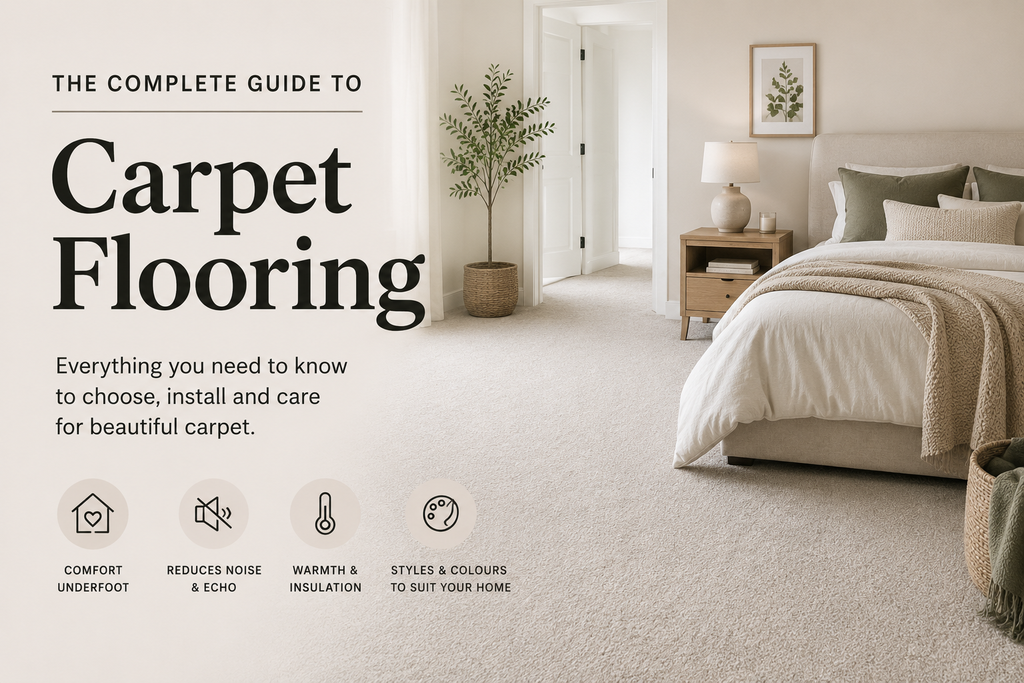
Carpet is the UK’s original comfort flooring; it’s not hard to see why it’s stuck around: it’s warm underfoot on a cold Tuesday morning, it’s forgiving on tired feet and clumsy toddlers, and unlike some flooring types we won’t name, it doesn’t turn your living room into an ice rink in socks. This guide covers everything you need to know before you buy or fit carpet flooring yourself — cost, pile types, lifespan, where it works (and where it really doesn’t), the mistakes that trip up most first-timers, and the tools you’ll actually need to get a proper, wrinkle-free finish.
Compare costs, understand the pros and cons, learn where carpet works best and discover the tools you’ll need for a successful installation
HOW MUCH DOES CARPET FLOORING COST?
This is usually the first question, so let’s start here. Carpet is sold and priced per square metre, and the range is bigger than almost any other flooring type — which is either great news or a trap, depending on how disciplined you are in a carpet showroom.
- Budget: £6–£15 per m² — thin, synthetic polypropylene piles. Fine for a spare room or a rental, but they’ll show wear fast in anywhere busy.
- Mid-range: £20–£35 per m² — this is where most family homes land, usually a hard-wearing twist or saxony pile that balances comfort and durability.
- Premium: £30–£50+ per m² — wool and wool-blend carpets (often 80/20 wool-nylon mixes). Softer, more durable, and noticeably better at hiding dirt between hoovers.
On top of the carpet itself, budget for underlay (£6–£14 per m²), gripper rods (£1.50–£3 per linear metre), and fitting if you’re not doing it yourself (£5–£12 per m², more for stairs at £5–£10 a step). As a real-world example, a 12m² double bedroom typically lands around £500–£650 all in, and a 20m² lounge closer to £850–£1,100. This doesn’t affect the price you pay, but it’s worth knowing before you fall in love with the wool one.
CARPET PILE TYPES EXPLAINED
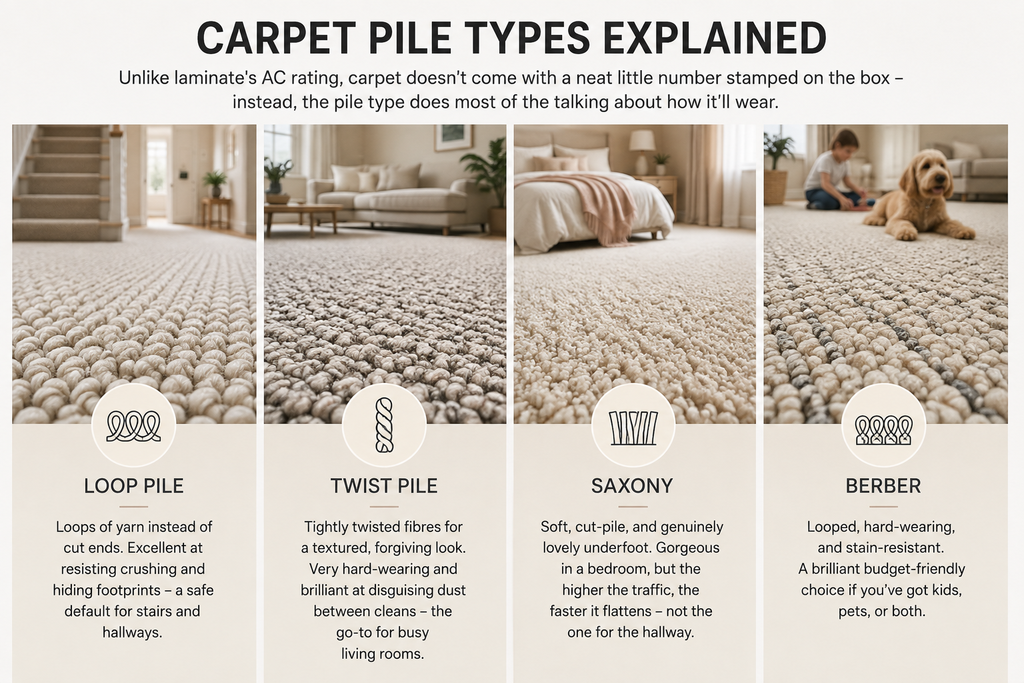
Unlike laminate’s AC rating, carpet doesn’t come with a neat little number stamped on the box — instead, the pile type does most of the talking about how it’ll wear.
- Loop pile: Loops of yarn instead of cut ends. Excellent at resisting crushing and hiding footprints — a safe default for stairs and hallways.
- Twist pile: Tightly twisted fibres for a textured, forgiving look. Very hard-wearing and brilliant at disguising dust between cleans — the go-to for busy living rooms.
- Saxony: Soft, cut-pile, and genuinely lovely underfoot. Gorgeous in a bedroom, but the higher the traffic, the faster it flattens — not the one for the hallway.
- Berber: Looped, hard-wearing, and stain-resistant. A brilliant budget-friendly choice if you’ve got kids, pets, or both.
HOW LONG DOES CARPET FLOORING LAST?
Synthetic carpets typically last 8–12 years with normal family use, while good wool or wool-blend carpets can comfortably reach 15–20 years if you look after them. A few habits stretch that lifespan considerably:
- Vacuum at least weekly (twice in high-traffic rooms) — grit is what actually cuts the fibres, not footsteps.
- Deal with spills immediately; blot, don’t rub.
- Get it professionally deep-cleaned every 12–18 months, even if it still looks fine.
WHERE DOES CARPET WORK BEST?
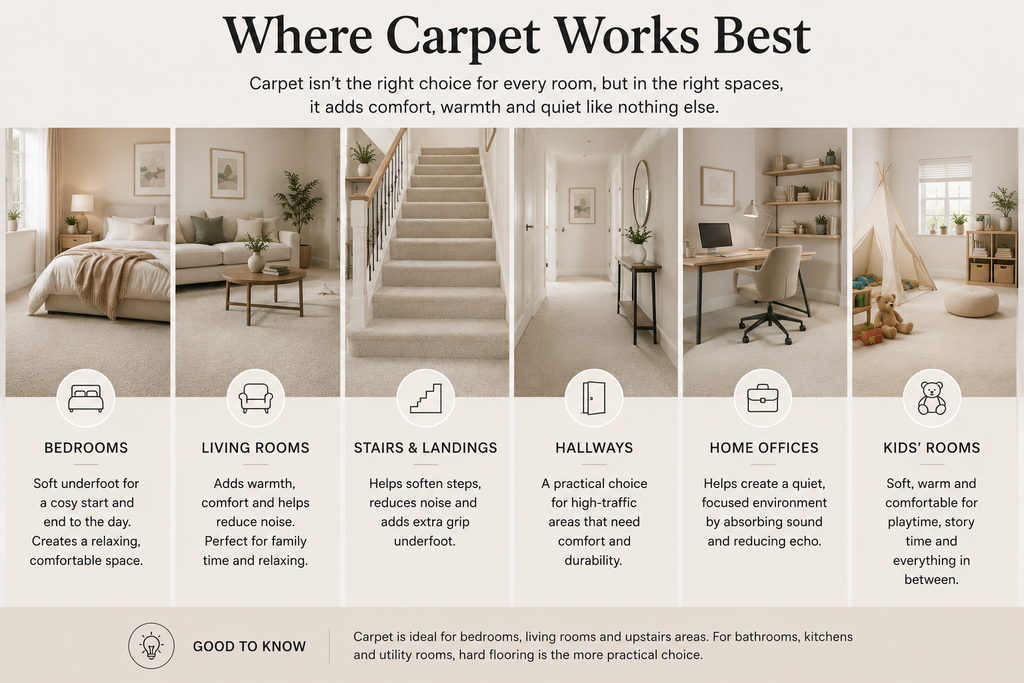
Carpet earns its keep in bedrooms, living rooms, hallways, and on stairs, where the warmth, sound-dampening, and underfoot comfort genuinely matter. It’s also the forgiving choice for a nursery or playroom — much kinder to a toddler’s knees than anything hard.
Carpet and standing water are not friends, though, so keep it out of bathrooms, kitchens, and utility rooms — a splash-heavy, spill-prone zone will stain, smell, and shorten its life fast. If you love the warmth of carpet but need something wipeable, a good LVT with underlay is the sensible middle ground.
COMMON MISTAKES
- Choosing the wrong pile for the room. A gorgeous saxony in a hallway will look tired within a year — match the pile to the traffic, not just the showroom feel.
- Skipping or downgrading the underlay. Underlay isn’t optional padding — it absorbs impact, adds warmth, and massively extends the carpet’s life. Buying the cheapest option here is a false economy.
- Under-measuring. Carpet is usually sold on the roll in set widths (often 4m or 5m), so you need to account for pattern matching and waste, not just your room’s floor area — this is exactly what a flooring calculator is for.
- Fitting without a knee kicker or power stretcher. Trying to stretch carpet flat by hand is how you end up with ripples and wrinkles within weeks. This is the one job worth hiring the right tool for, even on a DIY budget.
- Ignoring the gripper and door bar details. Skipping proper gripper rods or a threshold bar is a fast track to fraying edges and a carpet that slowly creeps away from the skirting.
A Carpet Flooring Worth Looking At
⭐ Tuda Carpets Barrati 15mm Saxony Pile Carpet
If you’re after a soft, comfortable wall-to-wall carpet that gives a room that cosy, finished feel, the Tuda Carpets Barrati 15mm Saxony is one worth considering. Its Saxony pile gives it a noticeably softer feel underfoot than a short, tightly structured carpet, making it particularly suited to bedrooms, living rooms and other areas where comfort matters. The 15mm pile also gives it that plush appearance without going into an ultra-deep shaggy carpet.
The Hessian backing is another useful feature, although you’ll still need a suitable underlay and properly prepared subfloor for the best result. There are several colour options and sizes, so you can choose something that works with your room rather than settling for one standard roll.
Best for: Bedrooms, living rooms and cosy spaces where softness and comfort are the priority.
Check the current Amazon price →
BEFORE YOU BUY CHECKLIST
- Measure the room twice (length and width), then add for waste and pattern repeat
Use our →FLOORING CALCULATOR to make it much easier for yourself - Decide on pile type based on the room’s traffic, not just how it feels in the showroom
- Choose the right underlay thickness and tog rating for the room
- Check if fitting is included or needs booking separately
- Confirm gripper rods and door bars are included in your order
- Acclimatise the carpet in the room for 24 hours before fitting where possible
- Keep leftover offcuts for future repairs
RECOMMENDED PRODUCTS
Essential Installation
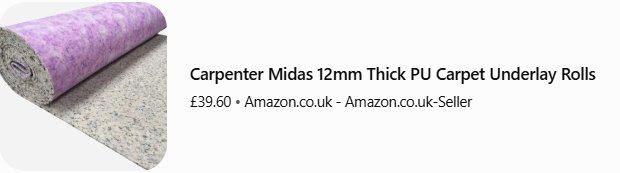
1. Carpet Underlay The single biggest upgrade to comfort, warmth, and lifespan. Match the tog rating to the room — higher for bedrooms, lower if you have underfloor heating.
View on Amazon
2. Carpet Fitting Kit (knee kicker, bolster & hammer, gripper rods) The tools that separate a smooth, tight fit from a rippled one. Worth hiring or buying even for a one-off job.
View on Amazon

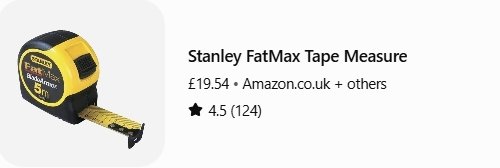
3. Tape Measure: Non-negotiable, and cheap insurance against an expensive measuring mistake.
View on Amazon
Finishing the Job
4. Door Threshold Bar: Neatens the transition between rooms and stops the carpet edge from fraying over time.
View on Amazon

5. Carpet & Upholstery Stain Remover For the inevitable red wine, muddy paw print, or toddler-related incident.
View on Amazon

6. Carpet Seam Tape Essential if you’re joining two pieces of carpet or patching an offcut — keeps seams flat and invisible.
View on Amazon

As an Amazon Associate, we may earn from qualifying purchases. This doesn’t affect the price you pay.
Want to work out exact quantities, waste and cost before you order? Use our Flooring Calculator.